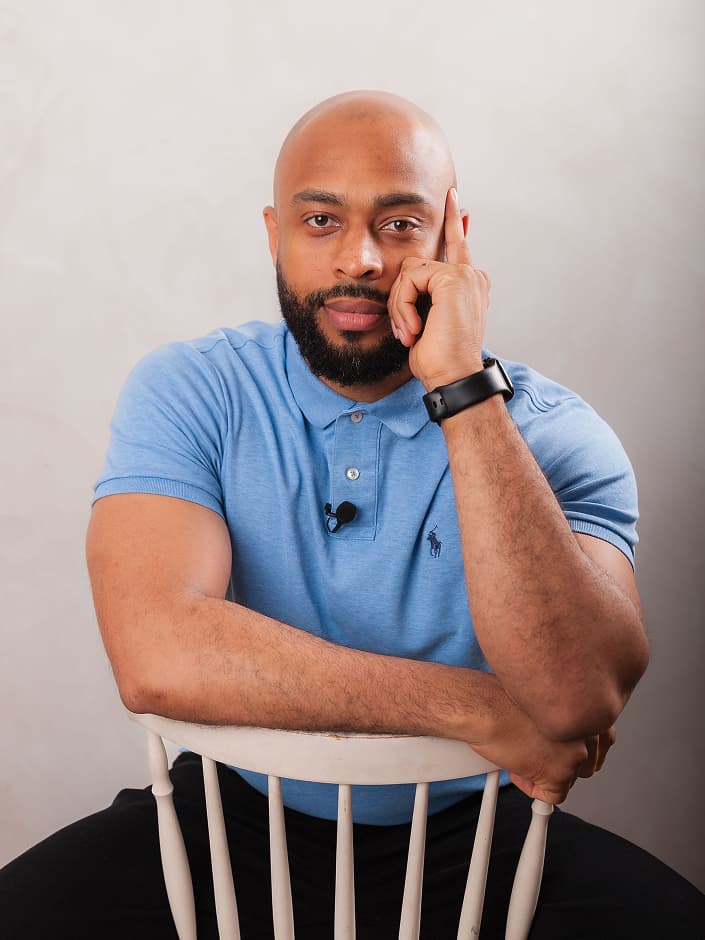
Father. Consultant. Founder. Coach.
I have spent fifteen years working where people and change collide. In that time I have advised boards, restructured teams, built two companies, and coached senior leaders through some of the most disorienting transitions of their careers.
The thread running through all of it is the same question: why do smart organisations and capable people struggle to actually change? The answer is never the strategy. It is almost always the human side, the part nobody budgeted for and nobody planned well enough.
I am also a father of three extraordinary girls, a man who has had to learn the hard way that building something impressive and building a life that means something are not the same project.
The Work
I started as a software tester. That taught me how to look at systems with scepticism. From there I moved into Business Analysis and Project Management, qualified in both, and spent several years helping organisations understand what they were trying to build and whether they were building it right.
About ten years ago, I moved into change management. That shift changed everything. I learned quickly that transformations do not fail because the technology is wrong. They fail because the people are not with you. Whether they understand it, trust it, or can see themselves in it matters more than any feature set. That insight has shaped every piece of work I have done since.
I co-founded M1 as an enterprise change management consultancy. We work with large organisations on the human side of transformation: helping senior leaders build the conditions for change to actually land, not just launch. The AI advisory dimension came later, as AI became one of the biggest change challenges our clients were facing.
I founded Modus Flow for a more specific problem: helping professional service firms adopt AI in a way their people could actually use. Most AI rollouts in professional services fail on adoption, not technology. Modus Flow is built around fixing that.
For the last two years or so, I have also been doing something most change consultants do not do: building. Using Claude Code, Lovable, and other AI tools, I build real software products from scratch. Not prototypes. Things that run. It started as curiosity and became a practice. Most AI advisors have never led people through change. Most change experts have never built with AI. I have done both.
The Journey
I did not grow up with much. I came into professional life with a hunger to prove something, and I directed that into my career. Early on I was doing two jobs, billing well, grinding hard. I believed that was what it meant to provide.
The coaching came out of my own experience. A moment with my three daughters that made me realise I had been optimising for the wrong thing. I built the Legacy Helix because I needed it. Not as a theory. As a way to live.
What I Stand For
Adoption over transformation. Anyone can design a future state. The work that matters is building the conditions for people to choose it, understand it, and sustain it over time. Strategy without adoption is just a presentation that cost a lot of money.
Most of the change programmes that fail do not fail because the technology does not work. They fail because the people never fully committed to using it. That is a leadership problem and a communication problem, not a technical one.
The same leaders who are excellent at driving results often struggle to be present in the parts of their life that matter just as much. I do not think ambition and presence are opposites. Most people have just never been shown how to hold both.
Honesty is the starting point. In consulting and in coaching, the most useful thing I can offer is a clear view of what is actually there. Not what looks good in a slide deck. What is real. That sometimes requires a level of directness that not everyone is comfortable with. I think it is worth it.
AI is a shift in how work gets done, not just another tool to deploy. The organisations keeping up are moving their people from doing the work to directing it. That is where I am spending a lot of my thinking.
The Personal
I have three daughters. One plays netball with a ferocity I genuinely admire. One does athletics, and I stand by the window and watch because her face when she sees me there is worth more than any professional achievement I can name. One does gymnastics, and I sit in on Saturday morning sessions and ask the coach what to look for when I watch her practise at home.
My wife Sharon holds everything together with a quiet competence that I have not always acknowledged as well as I should. I am still learning to do that better.
I am a Fellow of the Royal Society of Arts and a Member of the Institute of Directors. I do not lead with these things because I think they are the most interesting parts of who I am. But they represent the kind of practice, community, and standards I hold myself to.
I am still working on all of it. The consulting, the building, the coaching, the fathering. I think that is the honest version of what credibility looks like.
If any of this sounds familiar, let us talk.
Whether you are navigating change in your organisation or in your own life, I would be glad to have a proper conversation about where I can help.